What Is Open Home Kit and How Does It Work? A Complete 2026 Guide to Smarter Visitor & Lead Management
By the Open Home Kit Team · | Updated
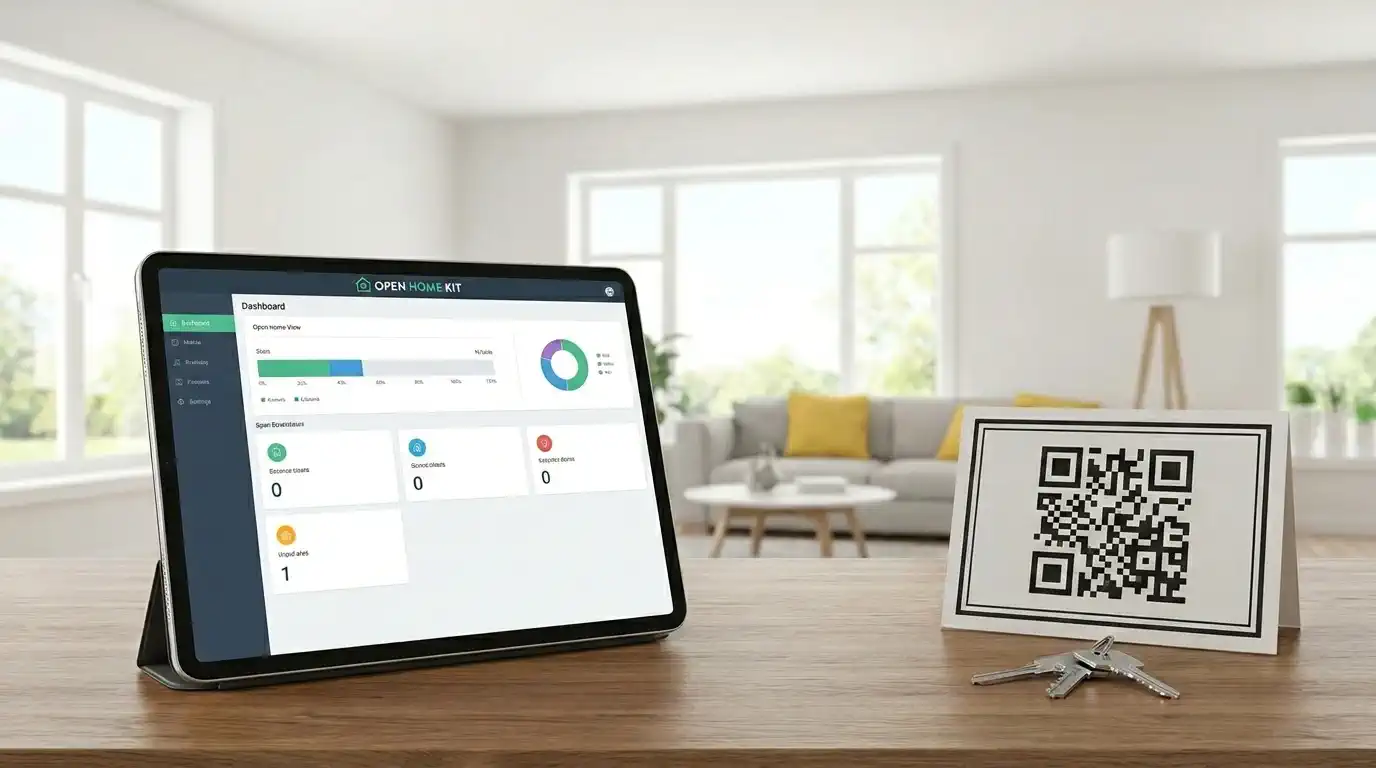
Open Home Kit is a digital visitor and lead management platform that replaces paper sign-in sheets with QR-based check-ins, automated follow-ups, and intelligent lead scoring.
It works by capturing visitor data the moment someone arrives, centralizing it in one dashboard, and turning visits into follow-up you don't have to remember to do yourself. This guide walks through exactly how it works, what's included, and where it fits for property professionals, events, and gated communities in 2026.
Why this question matters in 2026
Physical visits still drive high-value decisions — property purchases, rentals, event bookings, memberships — but most businesses still manage those visits with tools built for something else. Paper sign-in sheets don't convert. Follow-ups happen inconsistently, or not at all. Teams lose visibility into who actually showed intent. Data ends up scattered across notebooks, spreadsheets, and text threads instead of somewhere usable.
The result: revenue lost from people who were already interested enough to walk through the door.
A typical open house, start to finish
Here's what that looks like in practice. Say an agent hosts an open house on a Saturday afternoon with 40 visitors:
- A QR code flyer at the entrance takes each visitor to a mobile sign-in form. Average completion time is under 30 seconds.
- By the end of the afternoon, all 40 visitors are logged with contact details, buying timeline, and pre-approval status — no handwriting to decipher, no manual entry.
- The dashboard flags the 6 visitors who mentioned a timeline under 60 days or asked about the offer process as high-intent.
- Same-day automated emails go out to all 40, with a follow-up nudge scheduled for the 6 flagged leads a few days later.
- By Monday, the agent has a ranked list instead of a stack of index cards, and the six real conversations already have a head start.
That's the entire loop the sections below describe in more detail.
How it works, step by step
1. Visitors sign in using a QR code
Instead of writing details on paper, visitors scan a QR code, complete a short mobile-friendly form, and submit their details instantly. No unreadable handwriting, no staff manually transcribing data, faster check-in, higher completion rates. It works across open homes, show houses, developments, offices, and events.
2. Visitor data is stored in a centralized dashboard
Every sign-in feeds into one dashboard. From there you can see who visited, when, which property, and their engagement history — a single source of truth instead of scattered messages and spreadsheets.
3. Intelligent lead scoring identifies high-intent visitors
Not every visitor is equally valuable. Lead scoring evaluates visitor quality based on behavior and the data they provide, so you're prioritizing follow-up instead of guessing.
4. Automated email follow-ups happen instantly
Automated follow-up sends emails right after a visit, so nothing gets forgotten. Since you can connect your own email provider, you keep your own domain and sender reputation.
5. Analytics and AI insights turn visits into strategy
Analytics and AI insights let you track trends and conversion patterns over time, so decisions are based on visitor data instead of gut feel.
6. Built-in team collaboration
Multiple agents or staff can access the same data, share notes, and hand visitors off cleanly — useful for agencies, developers, and event teams where nobody should be contacted twice or missed entirely.
7. Custom branding
Sign-in pages, emails, and dashboards can carry your own branding, which matters for premium listings and corporate offices where a generic-looking tool undercuts the impression you're going for.
Who it's best for in 2026
Real estate agents, property developers, show houses, gated communities, and event venues — anywhere a physical visit represents potential revenue.
Final takeaway
The core idea is simple: capture visitor intent the moment someone walks in, and turn it into data your team can actually use. If your business depends on visits turning into conversations, this replaces the guesswork with structure and follow-through.
Ready to modernize your visitor management?
Join the agents using Open Home Kit to capture more leads and close more deals.
Ready to experience smarter visitor management?
Generate custom QR code flyers, collect qualified buyer details, and automate your follow-ups instantly. Try OpenHomeKit for your next open home.