How to Run High Performing Open Houses: A Step-by-Step Framework for Agents
Published
A successful open house does more than bring visitors through the door. It builds your pipeline, improves your brand, and creates future clients. Many agents treat open houses as routine tasks, which leads to weak turnout and missed leads. A well-planned setup turns the same event into a reliable source of high-intent buyers.
This guide gives you a complete framework that you can use on every listing. You’ll see what to prepare before visitors arrive, how to capture better leads on the day, and how to follow up in a way that converts.
Prepare the Home and the Marketing
Preparation affects turnout more than any other step. A strong marketing push creates visibility and sets the tone for the event.
What to do before the open house
- Clean, stage, and declutter the home so buyers can move easily
- Shoot updated listing photos and short vertical videos
- Publish the open house times on the MLS and your website
- Share the event on social platforms and local groups
- Add clear outdoor signs that guide visitors to the property
Small improvements like brighter lighting, soft background music, and a clear path through each room make the home feel more professional.
Increase Foot Traffic With Smart Promotion
Most buyers search on their phones. You want your event to be visible in every place they look. Creating shareable content, such as a detailed neighborhood guide, also helps by giving potential visitors a reason to share your listing with others.
Here are reliable traffic boosters:
- Promote the open house on Google Business Profile
- Share a short neighborhood walkthrough on Instagram and Facebook
- Run a small location-based ad for the weekend
- Send the event details to your email list
- Tell nearby agents who might have active buyers
You don’t need a big budget. Consistency across platforms makes more difference than spending more money.
Set Up a Digital-First Check-In Experience
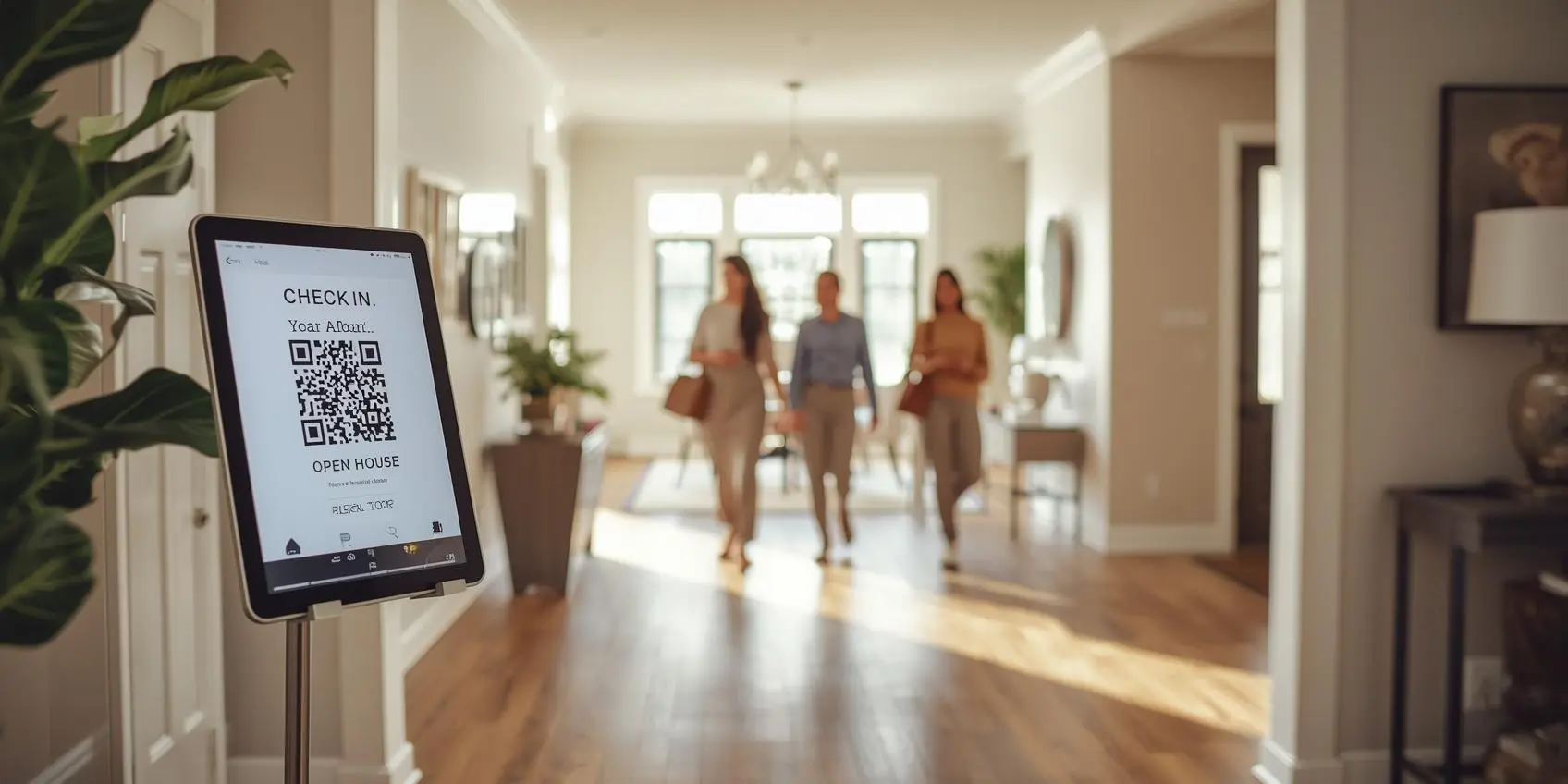
Paper sheets slow visitors down and produce weak contact details. A digital sign-in solves this problem. It makes the check-in process smoother, and it ensures that every visitor enters accurate information.
A browser-based check-in tool works well because it runs on any phone. Visitors scan a QR code and fill in the form instantly. This also signals that you run a modern and organized business.
Your form should collect details that help you understand buying intent:
- Name and contact information
- Buying timeline
- Whether they have a pre-approval
- Whether they are working with an agent
- Property type preferences
- Any special requirements
This information helps you plan your follow-up before visitors have even left the property.
Guide Visitors Through a Clear Flow
Once people sign in, give them a simple path through the home. This keeps the event controlled and lets you have real conversations.
Use these steps:
- Greet visitors and confirm the property details
- Invite them to explore at their own pace
- Stay available but avoid crowding them
- Take note of anyone who asks detailed questions
- Share printed information packets for easy reference later
The more comfortable visitors feel, the easier it is to understand what they want and whether they are serious buyers.
Identify High-Intent Buyers During the Event
Open houses attract a mix of visitors. You want to spot the ones who are closest to making a decision.
Common signs of high intent:
- Asking about offer processes
- Requesting seller disclosures
- Asking about neighborhood comps
- Mentioning a short buying deadline
- Discussing financing or pre-approval steps
These buyers should go into your "Hot" category as soon as possible. You do not want to lose track of them after the event.
Follow Up Quickly With a Clear Sequence
Speed matters. Many buyers visit several open houses in the same weekend. You need to reach out while the home is still fresh in their mind. If you want a deeper guide on lead organization, start here.
Use a simple sequence:
- Send a same-day thank-you email with listing details
- Send a follow-up that includes a property packet, video tour, or neighborhood data
- Ask if they want a private viewing
- Check in a few days later with a friendly message
Automated follow-ups save time and keep your process consistent. This is important when you’re running multiple open houses.
Track Results So You Can Improve Over Time
Performance tracking is one of the most overlooked steps. It shows what works, what needs to change, and which properties produce more serious buyers.
Key metrics to watch:
- Number of visitors
- Lead quality
- Email open rates
- Follow-up engagement
- How many visitors convert into conversations
AI tools can strengthen this workflow by highlighting patterns you might miss. For example, you might discover that certain times of day bring more qualified buyers or that specific message types produce better responses.
How a Unified Platform Fits Into Your Workflow
Running an open house is easier when your sign-in, lead scoring, follow-up, and analytics live in one place. A browser-based platform keeps everything accessible without installing an app.
A unified workflow usually includes:
- QR code digital check-in
- Automatic lead scoring
- A centralized dashboard for visitor data
- Automated emails that use your branding
- Analytics that show real performance trends
- Team features for groups hosting multiple events
This setup removes the usual scattered tools and helps you stay consistent across every listing.
Final Tip
Open houses perform best when your process stays the same every week. A clear sign-in system, fast communication, and simple analytics give you a strong advantage. Once your workflow is streamlined, each open house becomes a predictable source of qualified leads rather than a single weekend event.